


please confirm your location


请确认您的位置

The sustained growth currently driving the hunting and leisure market is being powered by changes in regulations and the latest technological breakthroughs that are essential for satisfying the community of responsible experts who are ready and willing to invest their money in sophisticated equipment.
A defining feature of the hunting sector is its market of experts and their search for high-end products. According to estimates, this sector is home to approximately 18 million people around the world. The market stands out with its consumers’ strong expectations for solutions offering high image quality, detection range, precision and reliability. The thermal imaging technology is now an inseparable part of this market and integral to the hunter’s sighting equipment with its ability to detect the heat signatures from living beings and stream usable images whether during the day or at night.
LYNRED, a world-class player in the hunting market, designs and produces high-performance infrared detectors and modules in Europe to equip thermal optical systems.
Its European production lines can draw on the company's high quality standards, compliance with all applicable regulations and manufacturing excellence. They reflect LYNRED's clear strategy of providing state-of-the-art components without competing against customers manufacturing optical systems and finished products.
1. Thermal imaging trends in the hunting and leisure market
Thermal imaging has clearly established its status as a vital technology for the hunting market, while continuing to make inroads into the outdoor leisure sector.
Driven by changing practices, the search for precision, and ever higher image quality, the leisure market can currently be divided into two main segments:
- Hunting: a mature, expert and premium market
- Wildlife observation: a surging volume market
1.1. Hunting: a market with a community of responsible experts
 Hunting stands as the most expert and demanding segment of the leisure market. This new generation of responsible and well-equipped hunters has incredibly high expectations when it comes to performance and image quality. Today's hunters are well-informed, conscientious amateurs who place just as much importance in the equipment's performance as their ethical practices. They can often be seen sporting thermal sights and are familiar with the criteria that determine an imaging system's performance:
- Detection range
- Image sharpness and precision
- Stability and reliability during intensive use
- Ease of use
- Proficient shooting through better identification
Thermal imaging is now considered to be an essential part of the hunter's vision gear. It allows hunters to enjoy their passion with a greater sense of responsibility and safety by providing them with an easier way of distinguishing between species and reducing the risk of a mistake.
1.2. Wildlife observation: a growing volume market

Wildlife observation is a much wider segment that harbors tremendous development prospects. In the United States, the number of wildlife observers is estimated to be 86 million, and that figure is the same in Europe.
The potential adoption rate for thermal imaging is ultimately considered to be around 20%, which suggests an upsurge in market growth in the forthcoming years.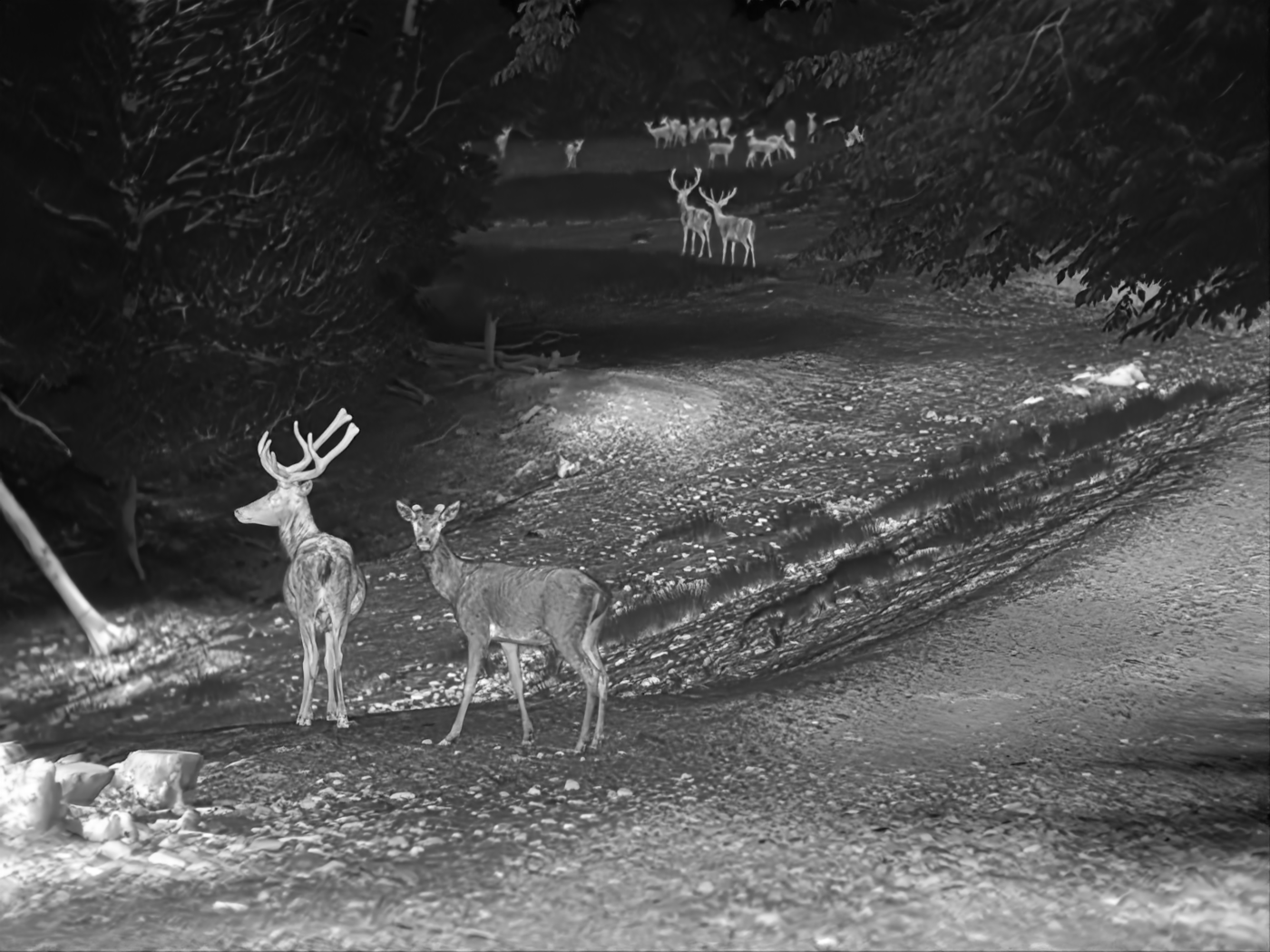
There are several reasons to account for this market's development:
- The general public's attraction for nature and immersive experiences
- The increasingly widespread availability of thermal optics
- Continual improvement in resolution and performance
- Falling cost of entry-level equipment
1.3. The key role played by regulations, especially in Europe
Regulations are one of the main factors shaping the leisure market, especially in European countries.

They influence:
- The chance to use different types of thermal optics
- Equipment marketing practices depending on the level of performance
- Technology uptake among users
Therefore, brands operating in Europe need to factor the regulatory framework into their product strategy. They are looking for reliable components produced locally, which simplifies the process of marketing their products while meeting conformity requirements.
LYNRED designs and manufactures thermal imagers in Europe in compliance with the strictest quality standards.
1.4. The surging popularity of large format sensors with higher resolutions
Expectations among experienced hunters are strongly inflating demand for higher resolution IR detectors with the ability to deliver images in greater detail and ensure easier identification of the sighted animal.
This technological trend also has the effect of making thermal imaging available to a wide swathe of the general public with higher-performance products at more affordable prices.
2. How thermal imaging is transforming hunting practices
Thermal imaging has radically changed hunters' practices. It improves the process of detecting the target, interpreting the details and improving shooting proficiency at the same time, which is essential for effective and responsible hunting.
2.1. Detection and observation in all visibility conditions
Thermal imaging allows hunters to spot their quarry in situations where conventional scopes have reached their limitations.
Infrared imagers stand out with their capacity to:
- Detect heat signatures, even in total darkness or poor visibility
- Pierce through challenging terrain, such as undergrowth, vegetation and shadowy areas
- Provide exploitable images day and night, regardless of the lighting conditions
This gives hunters a much greater chance of locating their target, tracking its movements and gaining a clearer picture of the overall scene.
2.2. Improved targeting and identification
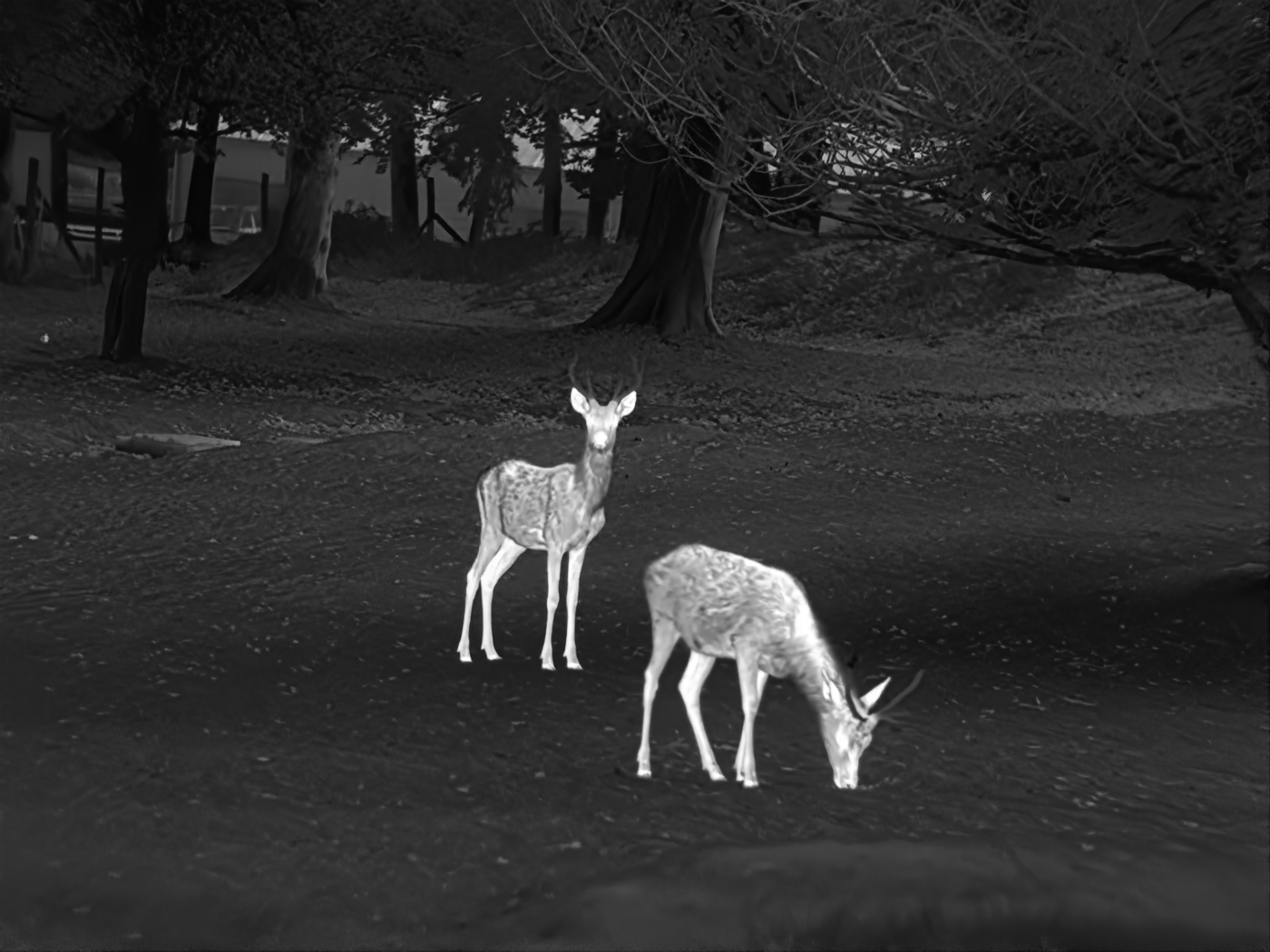
Thermal image quality plays a decisive role when attempting to identify an animal, especially its species, size and body weight. The performance of an IR detector, i.e. resolution, sensitivity and NETD, allows hunters to pick out increasingly fine details, which in turn helps them "read" the scene, while improving hunting safety and proficiency.
3. Technical requirements and performance criteria for the hunting market
3.1. Detector resolutions and formats for hunting
Resolution is a prerequisite for manufacturers and end users. Higher resolutions lead to images with a greater level of detail, which improves identification and broadens the range of applications for the same optical system.
The various segments in the hunting market especially value:
- VGA and XGA resolutions
- Smaller pixel pitches for obtaining images in greater detail
- Detectors designed for long-range applications or dense environments (foliage, undergrowth, etc.)
The trend for smaller pixel pitches also features high on the priority list among optics manufacturers as part of their search for increasingly compact devices offering better magnification. LYNRED’s technical demonstrations show that a smaller pixel pitch can bring up to an extra 40% magnification for the same focal length, while allowing manufacturers to produce lighter devices that are easier to handle.
With these developments in mind, LYNRED recently designed a new product called YOCTO 1024 (1024 × 768.8 µm). This detector rounds off the existing range (QVGA to SXGA) and enables manufacturers to enhance their ranges in line with their performance and design objectives.
3.2. Sensitivity and NETD: identifying the smallest temperature variations
The sensitivity of an infrared detector, which is measured by NETD (Noise Equivalent Temperature Difference), is another decisive selection criteria for thermal detectors in the hunting market. A detector with a low NETD value is capable of identifying tiny differences in temperature, making congested environments easier to read, and helping hunters detect faraway or partially concealed animals.
As far as optical systems manufacturers are concerned, sensitivity has a direct influence on the perceived quality of their products, especially for hunters who need to analyze the scene with precision.
3.3. Robust construction, stability and consistent performance
Detector stability and robustness are also highly valued among optics manufacturers. These requirements relate to reliable performance over time, the detector's ability to function in various environments, and reproducible image results from one sensor to another.
This means that end users can enjoy a stable experience without any deterioration in image quality, even during intensive outdoor use.
4. The reasons why manufacturers and integrators in the leisure sector choose LYNRED
4.1. A top-tier player in the leisure market
LYNRED has carved its reputation as a major supplier of infrared detectors in the market for hunting and wildlife observation optical systems.
Optics manufacturers can draw on LYNRED's:
- Proven expertise in designing high-performance imagers and modules
- Complete control over the production chain
- Strict compliance with applicable regulations
4.2. Premium imagers designed and produced in Europe
LYNRED specifically produces its infrared detectors and modules in Europe, which means that manufacturers are guaranteed:
- High industrial quality and reliability
- Easier exports without any additional constraints relating to checks on the final destination
- Reduced supply risks
- Full traceability of the manufacturing chain
4.3. Software tools and modules for accelerating the product development cycle
LYNRED is not only in the business of supplying IR detectors. The company also provides modules, software interfaces and development tools to simplify the process of embedding its detectors in optical systems for the hunting and leisure market.
LYNRED's plug-and-play modules make life easier for manufacturers by allowing them to shave tremendous time off their development cycles while maintaining the highest performance.
A prime example is the ATI640 LWIR module with its VGA resolution. This product ensures quick and secure integration for designing reliable optics without affecting image quality.
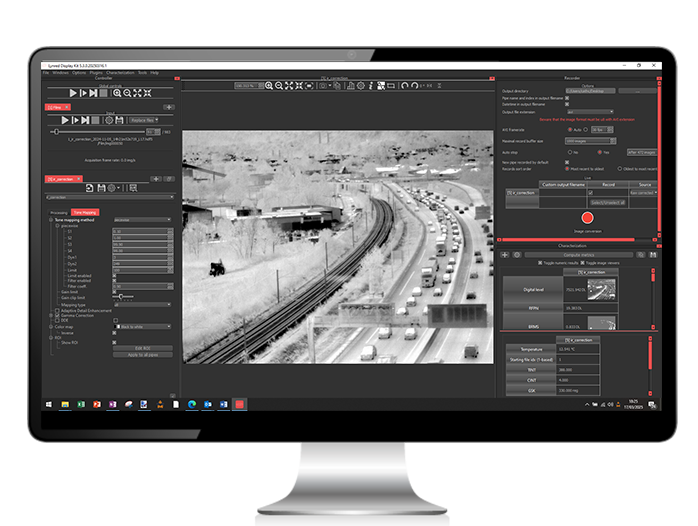
LYNRED's ToolBox (LTB) software suite rounds off the range of tools to help industry professionals ramp up their development processes. The ToolBox gives integrators access to an intuitive platform for assessing, fine-tuning and optimizing their infrared modules, with guaranteed fast development and consistent performance across the range.
The recent additions to the lineup, especially the ATI EOLE and ATI GALATEA SL modules, take this approach even further. They send out a clear signal of LYNRED's commitment to provide modular and adaptable high-performance platforms that are capable of satisfying the various needs expressed by manufacturers of optical systems for the hunting and observation market segments.


