


please confirm your location


请确认您的位置

LYNRED's "Environment" market encompasses three areas of application where the infrared detection technology can generate real decisive value:
- Optical gas imaging (OGI) plays a mission-critical role in identifying gas leaks, including such greenhouse gases as methane, and meeting the latest requirements in current regulations.
- Thermography can be used to inspect a facility's thermal performance and improve its operation.
- Solutions for firefighters improve visibility and ensure safer, more effective operations when working in challenging conditions.
Drawing on its unique expertise across the entire infrared spectrum, LYNRED provides camera manufacturers and integrators with high-performance detectors suited to a wide range of applications, from predictive maintenance through to environmental monitoring and personal safety.
1- Issues and segments in the Environment market supported by thermal imaging
Faced with the ever growing challenges in today's world, all the segments in this market are associated with protecting the environment, and the thermal imaging technology is capable of supporting this major issue.
1.1. OGI: keeping gas emissions under control to meet environmental challenges and regulatory requirements
Reducing fugitive emissions, especially such greenhouse gases as methane, has risen up industry's priority list. European and US regulations now impose greater monitoring obligations and stricter LDAR programs (Leak Detection and Repair), an area where optical gas imaging (OGI) plays a critical role.
OGI provides users with a real-time view of emissions that are invisible to the naked eye with infrared detectors offering sensitivity to the gas absorption spectra. This technology provides an easier way of:
- Quickly and accurately identifying leaks from complex facilities
- Complying with the increasingly stringent set of standards
- Shrinking the environmental impact caused by undetected emissions
Standard use cases include: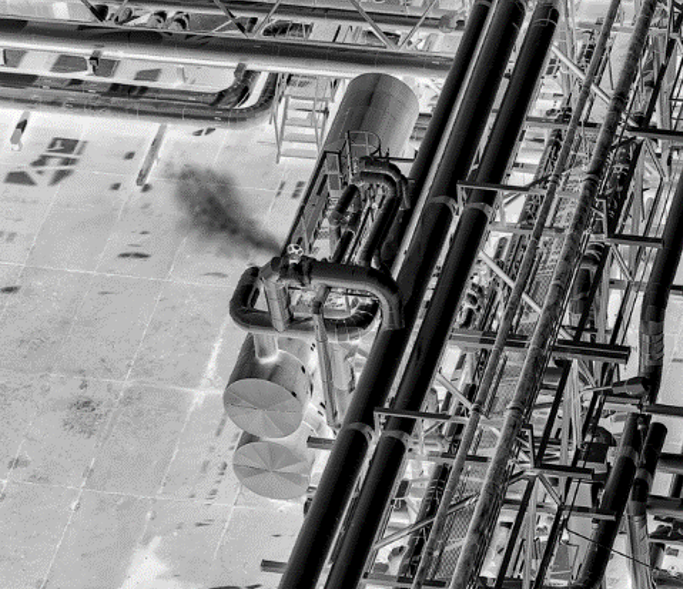
- Inspecting oil and gas sites (refineries, treatment units, compressor stations, etc.).
- Monitoring pipelines and transport facilities
- Checking seals on industrial equipment and connections
- Continuously monitoring facilities with stationary cameras to detect leaks and raise the alarm in real time
- Performing aerial inspections with drones or other vehicles to quickly cover large surface areas
LYNRED offers an extensive range of cooled and uncooled detectors with the enhanced sensitivity, stability and spectral selectivity required for OGI applications. These sensors give manufacturers the performance that they need to develop systems with the ability to view leaks and help industry achieve its aim of complying with regulations and curbing its impact on the environment.
Empowered by their spectral performance and high sensitivity, the cooled and uncooled detectors developed by LYNRED are ideally suited to systems designed to accurately and reliably detect such gases as methane, CO₂, SF₆ and certain refrigerants.
1.2. IR thermography: a key lever for enhancing industrial facility performance and durability
Thermography is an essential tool for improving an industrial facility's safety and energy efficiency. By accurately measuring any temperature variations, the technology detects abnormal situations that would otherwise go unnoticed by the naked eye before they start causing failures or dragging down operational performance.
Thermal imaging is used in the energy, manufacturing and critical infrastructure sectors for its capacity to simplify the following:
- Carrying out predictive maintenance by identifying abnormal overheating or insulation defects
- Conducting thermographic surveys of mechanical and electrical equipment
- Optimizing processes by ensuring constant quality inspections and exercising greater control over thermal parameters
- Monitoring facilities to ensure reliable and sustainable operations
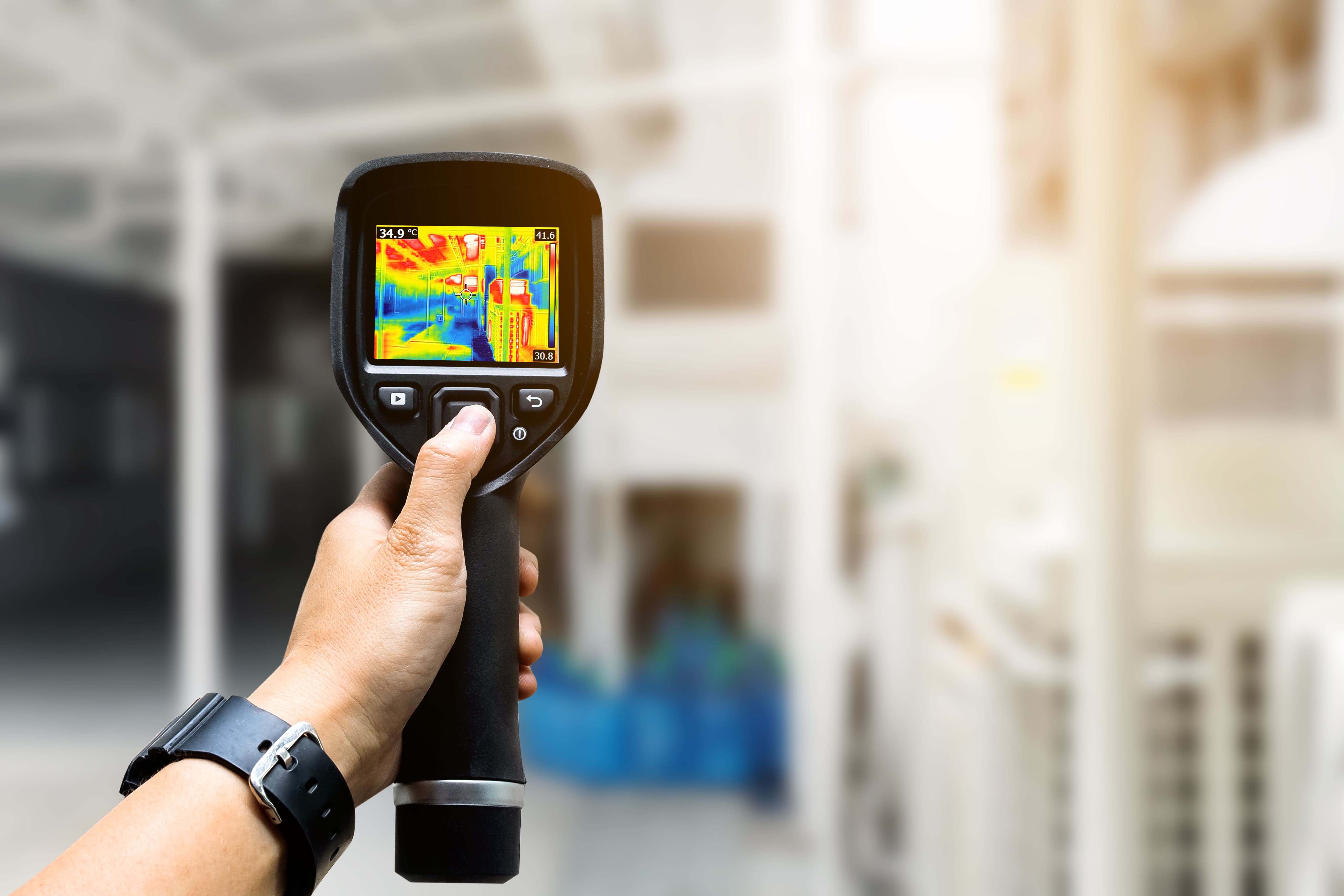 Standard use cases include:
- Inspecting electrical components (overheating, load imbalances, hotspots, etc.)
- Monitoring mechanical equipment (bearings, motors, rotating systems, etc.)
- Performing quality control across production lines (consistent temperatures, conforming parts, etc.)
- Monitoring energy infrastructure or industrial facilities
- Analyzing the performance of heating systems and solar power plants
With their compact and energy-efficient design, LYNRED's sensitive infrared detectors enable manufacturers to develop systems that are equally suited to field inspections, embedded platforms (handheld cameras), and cameras intended for continuous control applications (stationary cameras). Their stability and accurate measurements play a direct role in lowering maintenance costs and extending the infrastructure service life.
1.3. Thermal imaging for firefighters: ensuring a safer, more effective response
The fire and rescue services are often required to work in environments where visibility is severely hampered by smoke, heat and darkness. In such extreme conditions, thermal imaging is an essential tool for ensuring team safety and supporting on-the-ground decisions.
Thermal cameras fitted with infrared detectors can be used to:
- See through smoke and gain a clearer understanding of the layout
- Quickly detect victims or obstacles that would be invisible under normal conditions
- Identify hotspots or risks of a fire outbreak
- Reinforce protection for firefighters by giving them instant access to reliable information
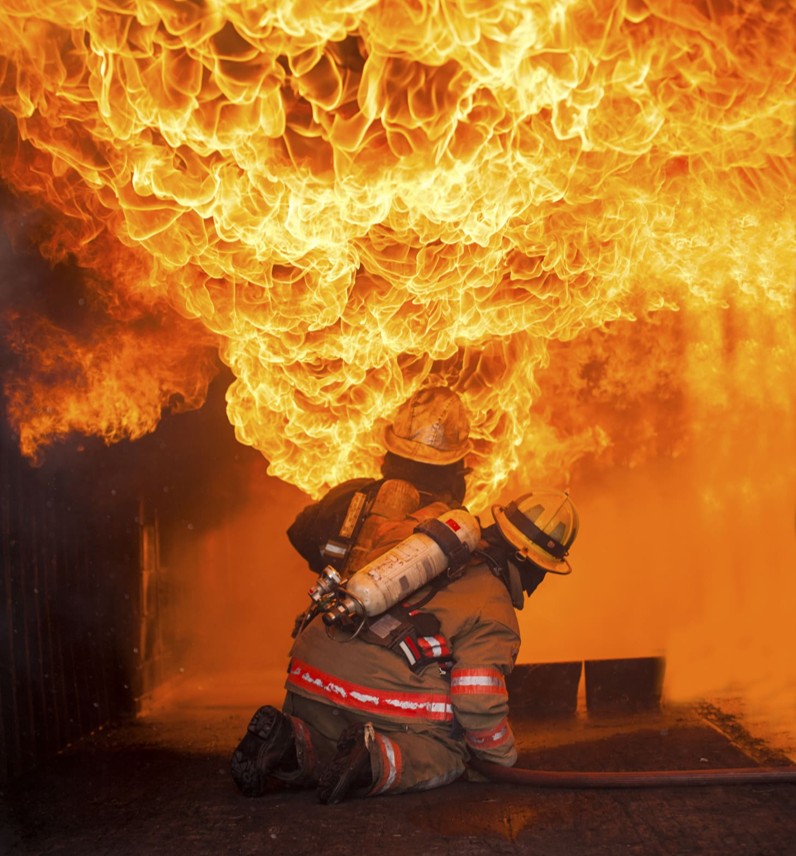
Standard use cases include:
- Searching for victims in dark or smoke-filled buildings
- Locating active fires and monitoring outbreaks
- Assessing structural stability or the risk of a collapse
- Navigating in zero-visibility conditions during indoor operations
- Receiving support for decisions aimed at guiding operations and improving team safety
In response to these needs, LYNRED develops infrared detectors that are compatible with firefighting equipment, increase team safety, and improve the effectiveness of search, rescue and firefighting operations.
LYNRED's detectors are designed to ease the constraints when performing emergency response operations in extreme conditions, while providing the sensitivity and instantly actionable intel needed for firefighters' thermal cameras.
2. The technical challenges facing thermal imaging in the environment market
2.1. Spectral requirements and selectivity for OGI applications
Optical gas imaging requires precision control over the spectral range. To view such gases as methane, CO₂, SF₆ and some refrigerants, detectors need to be combined with filters covering the relevant absorption wavelengths.
Therefore, OGI performance depends on the:
- Sensitivity in the target spectral band
- Stability of the signal
- Ability to produce a usable image for inspection or monitoring purposes
2.2. Sensitivity and precision measurements
An infrared detector's ability to identify tiny temperature variations is vitally important for:
- Pinpointing abnormal temperatures during thermographic inspections
- Detecting the signs of a gas leak during OGI
- Quickly identifying hotspots during firefighting operations
Radiometric stability, a low NETD value and uniform quality are key to obtaining reliable images from a detector in all types of conditions.
2.3. Strength and reliability in demanding environments
Dedicated cameras for firefighting or industrial inspections are exposed to harsh conditions, such as extreme temperatures, impacts, vibrations, humidity, smoke and dust, without forgetting that they need to work on a wide variety of platforms.
Consequently, detectors must offer:
- Excellent mechanical strength
- Operational stability in variable conditions
- Long-term reliability to guarantee equipment availability
- All the above on a broad array of platforms, including handheld cameras, embedded systems and drones
2.4. Compliance with regulatory and market requirements
These markets are governed by a stringent set of regulations (EU, EPA and LDAR programs for OGI market). Detectors must be capable of allowing manufacturers to develop solutions that fulfil their surveillance, inspection and reporting obligations.
As such, technological performance is vital for:
- Complying with applicable standards
- Anticipating changes in regulations
- Supporting operators' environmental strategies
3. LYNRED: a committed partner with a strong innovation culture
3.1. Technological expertise spanning the entire infrared spectrum
LYNRED provides one of the most extensive detector and module ranges in the market, covering the SWIR, MWIR, LWIR and VLWIR bands:
- Cooled solutions for applications where very high sensitivity is a must (inspections, OGI, long-range monitoring, etc.)
- Microbolometer solutions with compact designs and low power consumption for continuous surveillance (thermography, monitoring, firefighting, etc.)
Faced with such a wide selection, manufacturers can easily choose the best-fit detector for their platform, whether a handheld, stationary, embedded, drone-based or vehicle-mounted system.
3.2. Solutions designed with modern platforms in mind
LYNRED's detectors are designed to address the main trends shaping the market:
- Miniaturized systems
- Lightweight construction and low power draw for UAVs
- Enhanced sensitivity for OGI and high-performance thermography
- Robust design for operations in challenging environments (firefighting, industrial inspections, etc.)
This level of adaptability provides integrators with a pathway for developing innovative, high-performance cameras meeting their end-users' expectations.


